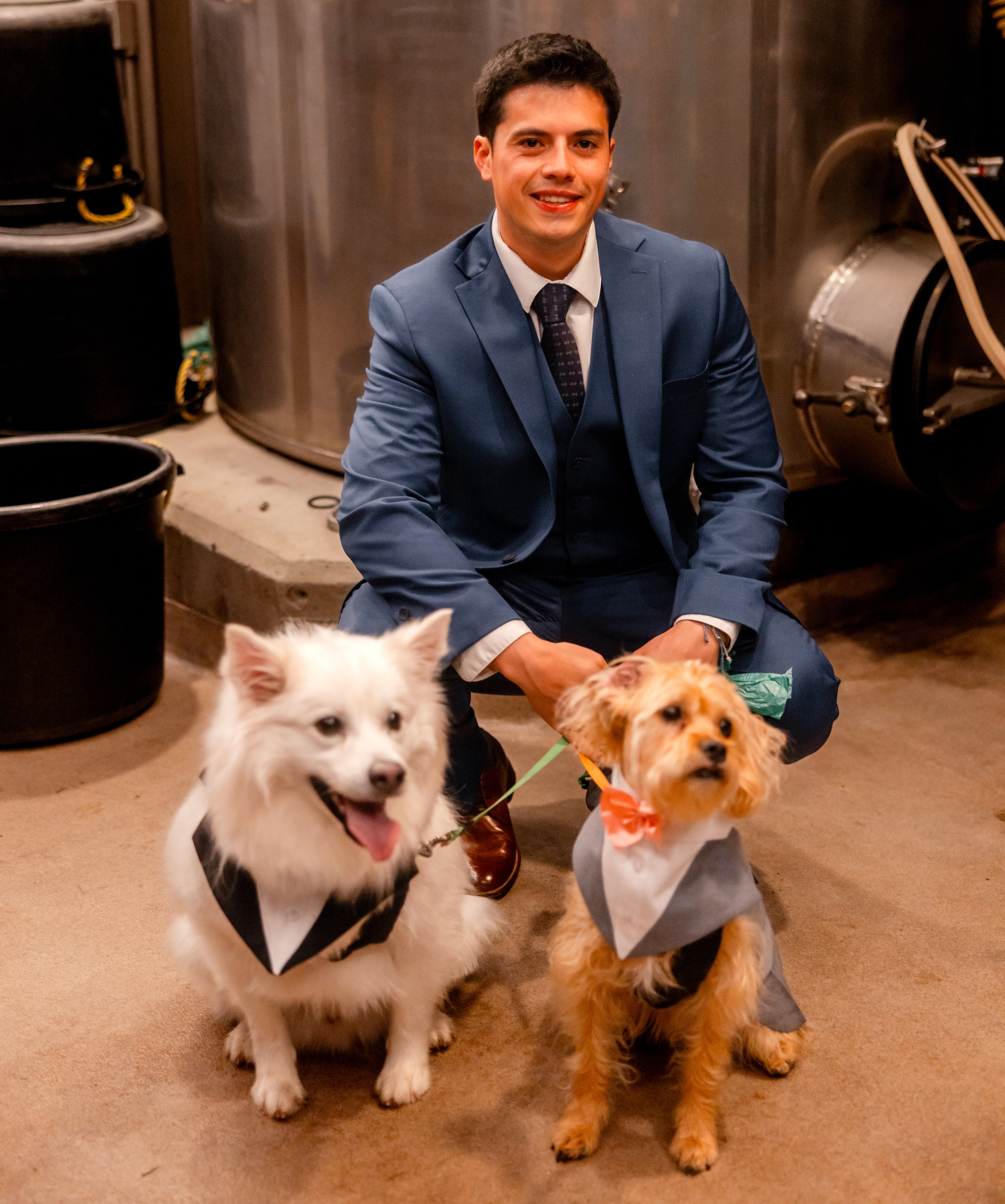
About me
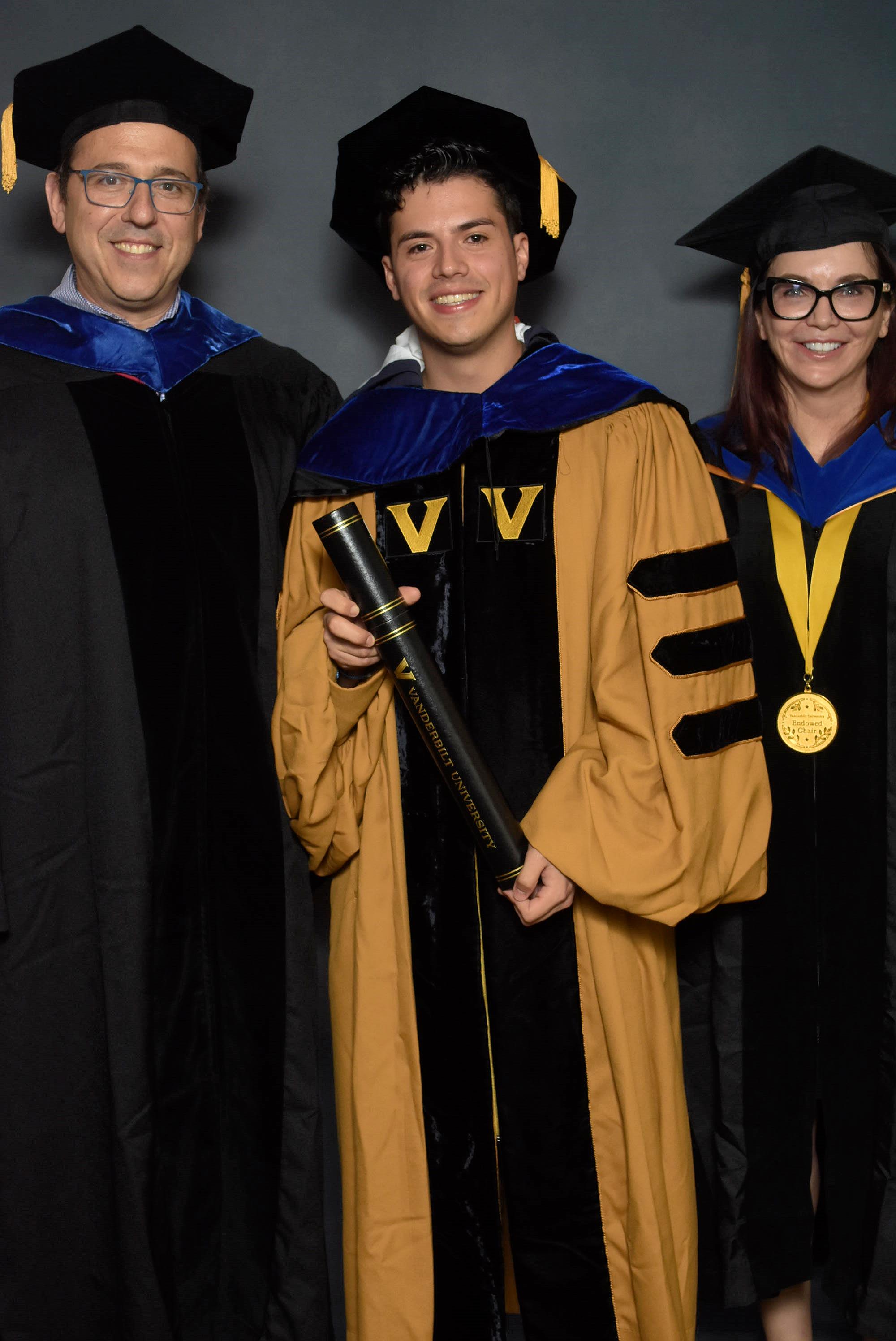
I am originally from San Jose, Costa Rica. I moved to the U.S. in 2010 to study astrophysics. Currently, I am a NSF Astronomy & Astrophysics Postdoctoral Fellow at Yale University working primarily with Prof. Priya Natarajan on black hole seeding, accretion and feedback as well as its connection to galaxy formation. In 2023, I obtained my Ph.D. in Astrophysics from Vanderbilt University working under the supervision of Prof. Kelly Holley-Bockelmann and Andreas Berlind. As a Fisk-Vanderbilt Master's-to-PhD Bridge fellow, I obtained my Master's in Physics from Fisk University. In 2015, I graduated from the University of North Carolina at Chapel Hill with a bachelor's degree in mathematics. I started my journey at the Northern Virginia Community College.
Research
I study how black holes form, grow, and shape the galaxies around them. Every massive galaxy, including our own Milky Way, has a supermassive black hole at its center. These black holes release enormous amounts of energy that can either help or shut down star formation across an entire galaxy. My work uses computer models to understand this relationship, from the very first black holes in the universe to how they influence galaxies today.
My research is organized around three connected questions:
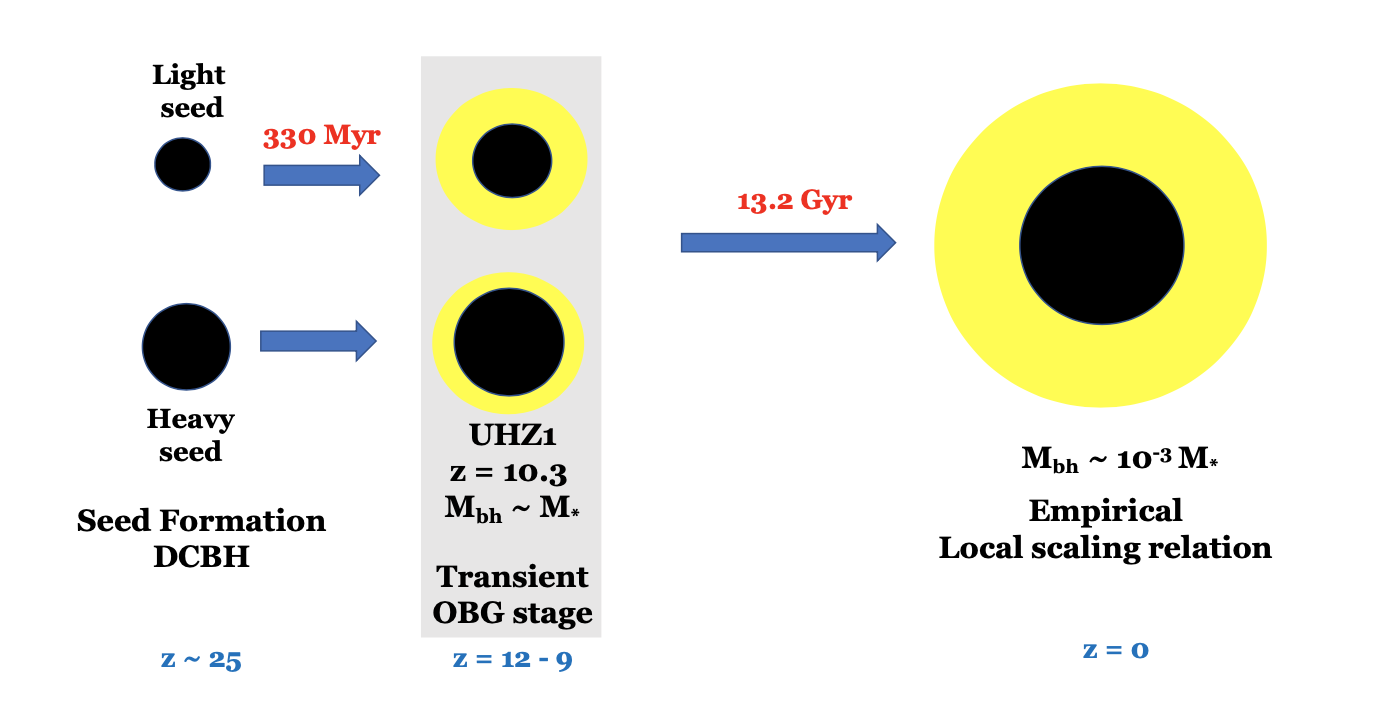
There are two very different ways the first black holes could have formed: small "light" seeds (roughly the mass of a large star) or "heavy" seeds (thousands of times more massive, formed when a giant cloud of gas collapses directly into a black hole without ever becoming a star). Both pathways could eventually grow into the billion-solar-mass black holes we see today, so telling them apart is not straightforward. But heavy seeds leave behind a telltale sign: in the early universe, they would briefly produce galaxies where the central black hole is almost as massive as all the stars in the galaxy combined, something light seeds are far less likely to produce. Finding one of these lopsided galaxies would be strong evidence that at least some black holes started out big (Natarajan+2024).
1. How do the first black holes form? The James Webb Space Telescope has spotted black holes a billion times heavier than our Sun, existing when the universe was less than a billion years old — far too young, by our usual understanding, to have grown that big. This raises a basic question: were these black holes born big, or did they start small and grow unusually fast? I test both possibilities in my models to see which one better matches what telescopes are actually finding.
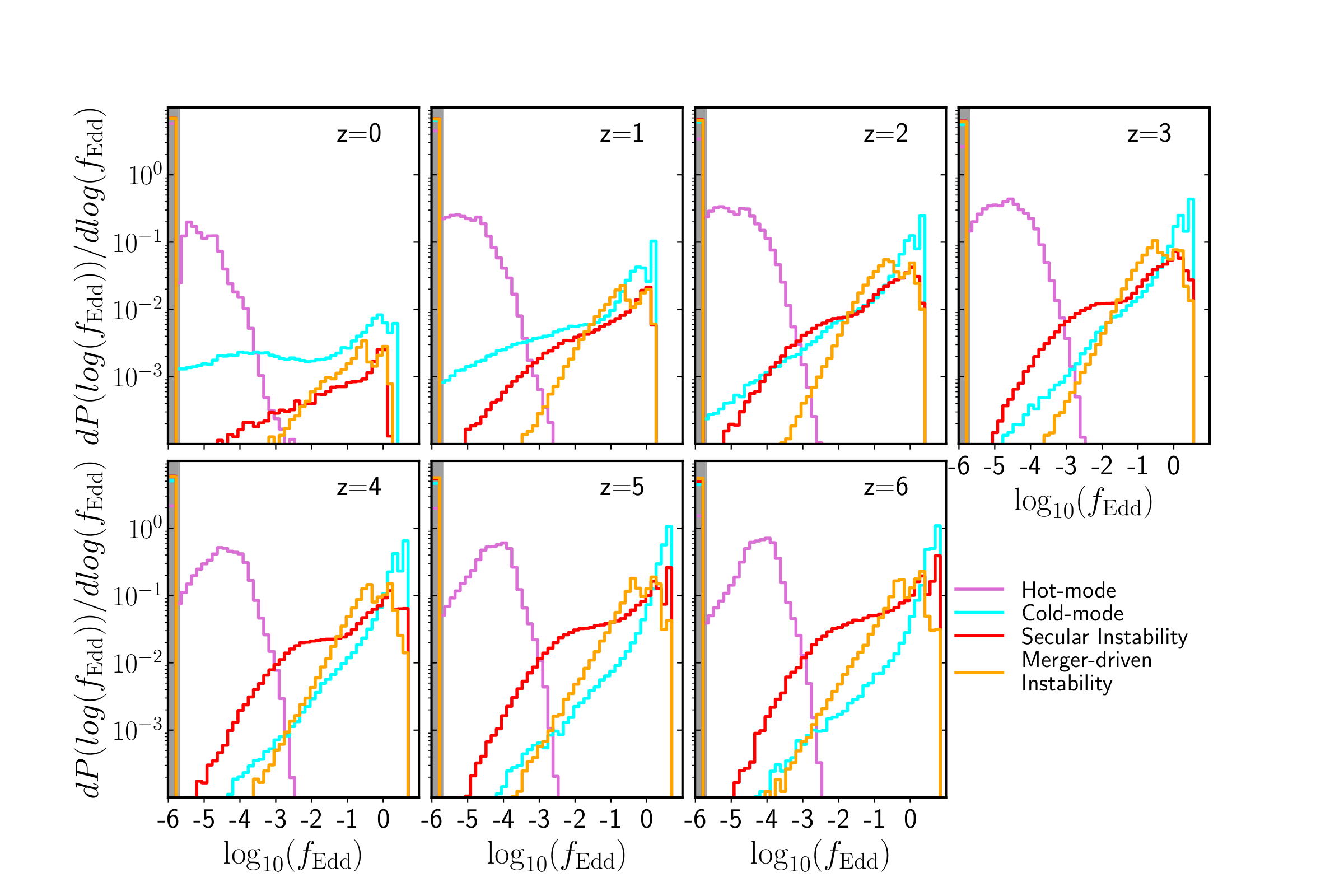
We compare how quickly black holes are feeding across four different models, including my own (Dark Sage), across cosmic time and across galaxies of different sizes. Each column shows a different point in the universe's history, from today (left) to roughly a billion years after the Big Bang (right). Each row groups galaxies by the mass of their surrounding dark matter halo, from galaxies like the Milky Way (top) to massive galaxy clusters (bottom), with the last row combining all sizes together. Across every model, we find that black holes feed at a wide range of rates rather than a single typical speed, and how spread out those feeding rates are changes depending on both a galaxy's size and how far back in time we look (Porras-Valverde+2026).
2. How do black holes grow over time? Black holes grow in two ways: by pulling in surrounding gas, and by merging with other black holes when galaxies collide. I use semianalytic models to figure out which of these processes dominates, and when. I'm also exploring a growth pathway that has not been well studied, dense star clusters at the centers of galaxies, which may act as nurseries where black holes are born and grow before the galaxy around them even fully forms (work in progress).
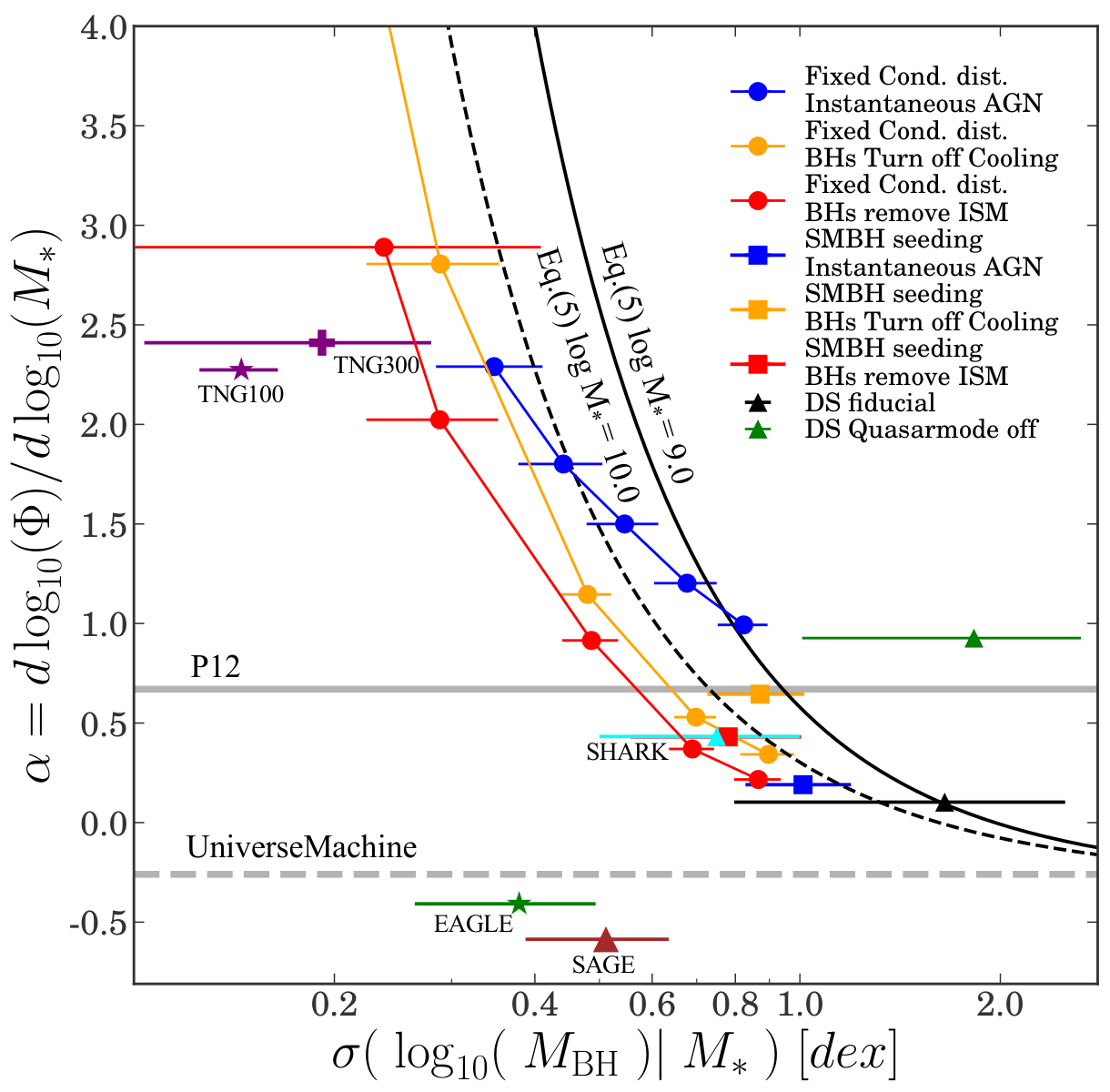
This plot tests a key prediction from models in Porras-Valverde+2024. The amount of variation in black hole mass, even among galaxies of the same size, leaves a measurable fingerprint on the population of galaxies that have stopped forming stars. We compared many different models, including my own (Dark Sage) run with several variations, alongside major simulations and observational results from other studies. Across all of them, we find a clear pattern: the more black hole masses vary from galaxy to galaxy, the more gradually the population of red/dead galaxies tapers off at the low-mass end, rather than dropping sharply. This gives us an indirect way to measure how much black hole growth varies from galaxy to galaxy, simply by looking at the shape of the quenched galaxy population (Porras-Valverde+2025).
3. How does black hole feedback regulate galaxies? As a black hole feeds, it can blast out jets of energy and radiation powerful enough to push gas out of an entire galaxy, cutting off the fuel needed to form new stars. I study how this process depends on the black hole's spin and feeding rate, and I'm working to connect physics happening right at the edge of the black hole to its effects on a galaxy millions of times larger.
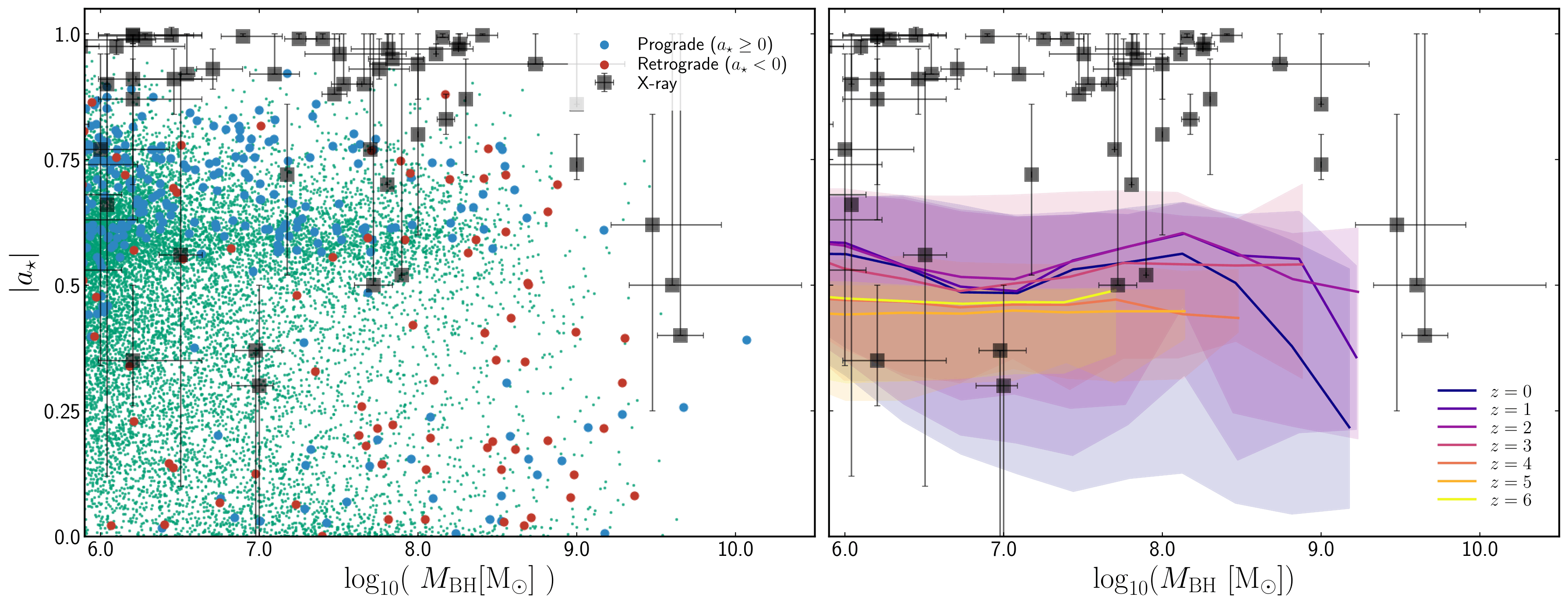
This plot shows how fast black holes spin as they grow more massive, tracing this relationship from today back to roughly a billion years after the Big Bang. Each line traces the typical spin at a different point in cosmic history. Blue and red points mark actively feeding black holes, split by whether their spin is aligned with the direction they're feeding from or tumbling against it. Black squares show real spin measurements astronomers have made using X-ray observations. One striking result is that as the universe ages, the most massive black holes tend to spin down rather than up, which tells us something about how their surrounding gas is organized as they grow.
In reality, a black hole's spin is not always fixed. It changes over time depending on how it feeds. When gas flows in a steady, organized way, it spins the black hole up in a consistent direction. When gas arrives chaotically, from multiple directions at once, it can leave the black hole spinning slower or even flip its spin entirely. This matters because spin controls how much energy a black hole's jets can carry. A fast-spinning black hole can drive much more powerful feedback than a slow-spinning one. By tracking how spin evolves alongside a black hole's feeding history, I can predict not just how big a black hole gets, but how disruptive its impact on its host galaxy will be.
ADS
Download CV
Cenca Bridge
In 2016, I started the Central American - Caribbean Bridge in Astrophysics organization (Cenca Bridge) to develop astronomy research opportunities in the region. Currently, I am a co-founder and co-leader of Cenca Bridge Inc., a U.S. nonprofit organization with over 100 undergraduate students from Central America and the Caribbean. As a co-leader, I have personally mentored several students who completed our remote internship program, tranistioned to industry jobs, and got admitted to masters and PhD programs in science. I contribute to program management and development of computational and professional development workshops as well as the Cenca Bridge Remote Internship. I have also done work on the accounting and financial aspect of the organization.
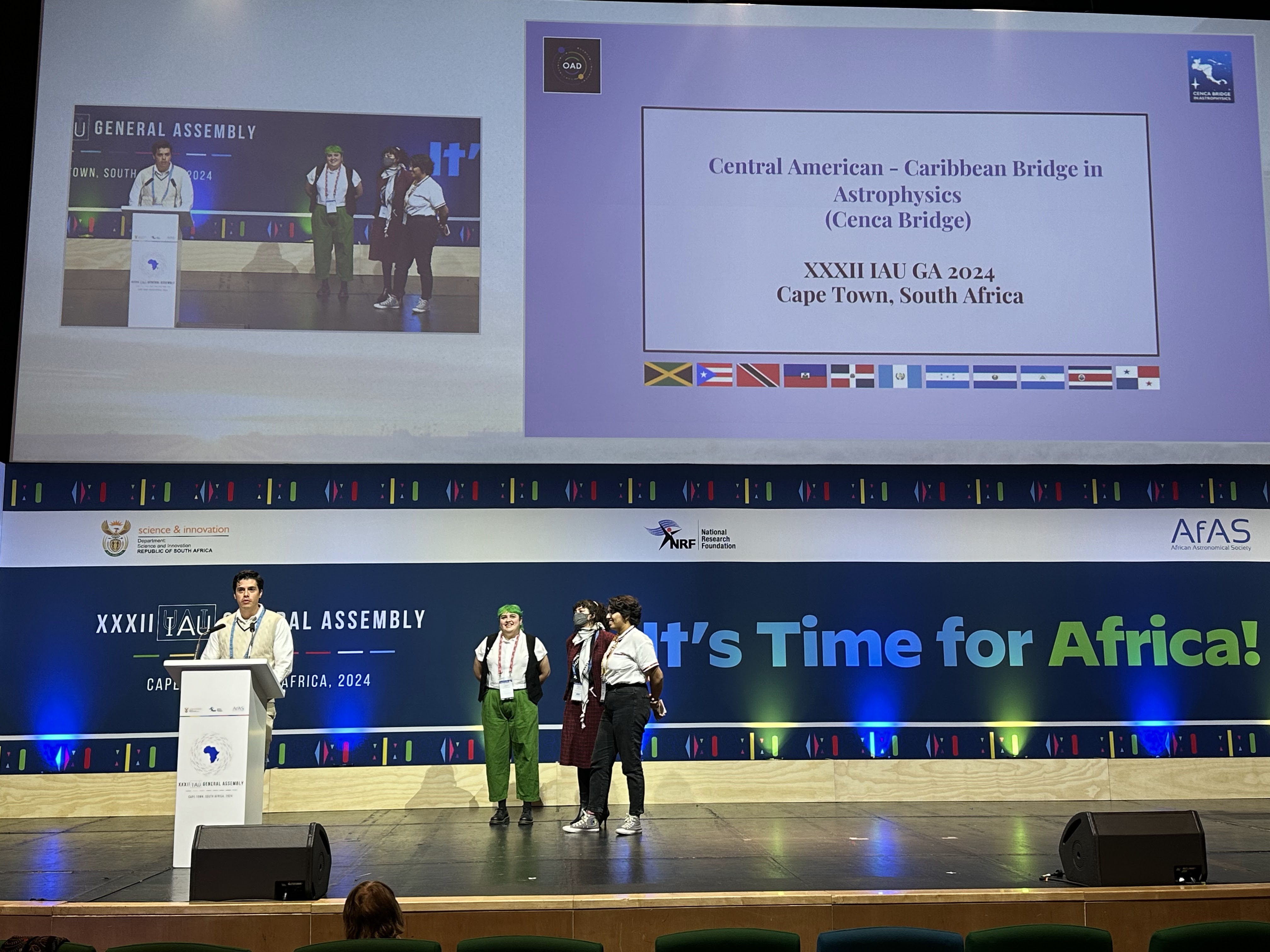
Receiving the International Astronomical Union (IAU) Development Prize at the IAU General Assembly in Cape Town, South Africa.
As co-founder of Cenca Bridge Inc., my nonprofit entrepreneurial experience includes:
- Organizing monthly social events and a webinar series
- Organizing computational and professional development workshops
- Recruiting research advisors for our remote internship program
- Launching and reviewing applications for the remote internship, and selecting participants
- Peer-mentoring remote internship students
- Managing the Cenca Bridge website
- Establishing partnerships
- Participating in weekly co-leadership meetings
- Grant writing
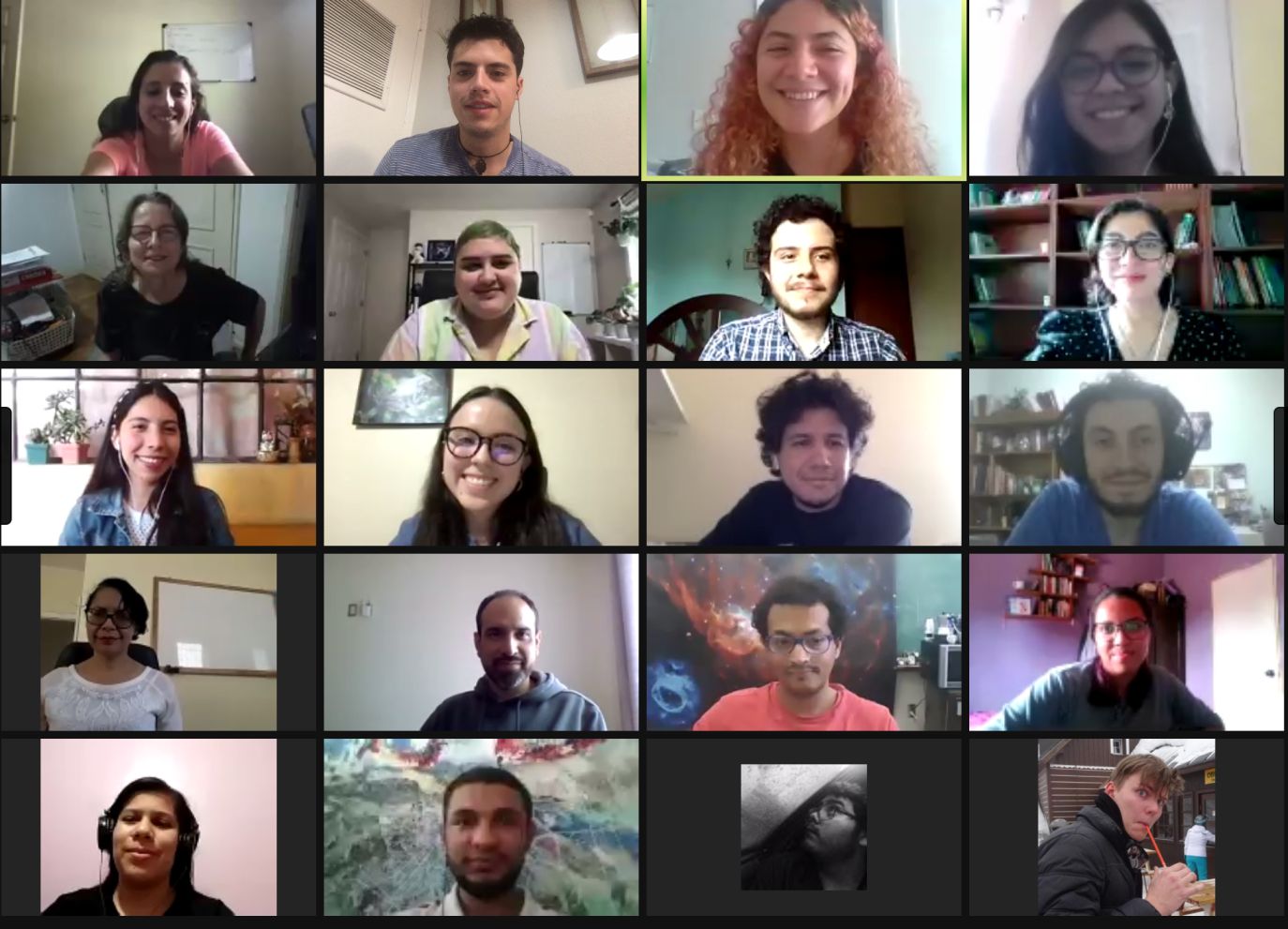
Opening access to resources in mentorship, astrophysics research, and computation to Central American--Caribbean communities.
La nación
En la escuela, el ‘cole’ y al inicio de la ‘U’ le iba mal; hoy hace su posdoctorado en Astrofísica en Yale: a short article describing my academic path from high school until my current position as a postdoctoral research fellow.
Jóvenes astrónomos reciben premio por inculcar la ciencia en Centroamérica: an article highlighting our $1.2M grant award from the Simons Foundation to support Central American–Caribbean science development.
International Astronomical Union
IAU Astronomy Outreach, Development and Education (ODE) Prizes: Development prize for creating "unique and transformative impact on the ability of undergraduate students in the Central America-Caribbean region to engage in astronomical research and capacity building using astronomy."
Yale News
‘We are all connected’: Building bridges to careers in astrophysics: a profile and Q&A on my path into astrophysics and my work co-founding Cenca Bridge, a nonprofit supporting Central American and Caribbean students in astronomy, which received the IAU's Astronomy Development Prize.
Vanderbilt Article
Vanderbilt graduate student creates academic bridge for Central American and Caribbean students in astrophysics: article highlighting our team's contribution towards improving astrophysics research opporutnities in Central America and the Caribbean
Futurum interview
Interview conducted by Futurum Inspiring the next generation.
Costa Rican National Academy of Sciences
Presentation given in Spanish to the National Academy of Sciences in Costa Rica. La Búsqueda de vida en planetas extrasolares.
Interview conducted by Ticotal, an umbrella organization of the National Academy of Sciences in Costa Rica that highlights Costa Rican scientists abroad. Here I was highlighted in Talento destacado Ticotal.
MAD SAGE
I built the Magnetically Arrested Disk in SemiAnalytic Galaxy Evolution (MAD SAGE) model, which is an expansion from Dark Sage (Stevens+2024), to trace how black holes' spin evolution affect galaxy properties, from the earliest stages of galaxy formation through to today. It's part of a broader class of tools called semianalytic models. MAD SAGE can be found on Github here.
How a semianalytic model works
A semianalytic model is not a full simulation of every gas particle and star in a galaxy. That would take too much computing power to run for millions of galaxies at once. Instead, it uses simplified, physics-based rules to track how galaxies and black holes evolve over cosmic time. This trade-off is what makes semianalytic models powerful:
- They run fast enough to model millions of galaxies across the entire history of the universe
- They let me test "what if" scenarios by swapping out individual physical assumptions and seeing what changes
- They are built on a skeleton of dark matter structure taken from large cosmological simulations, so the galaxies still grow within a realistic cosmic web
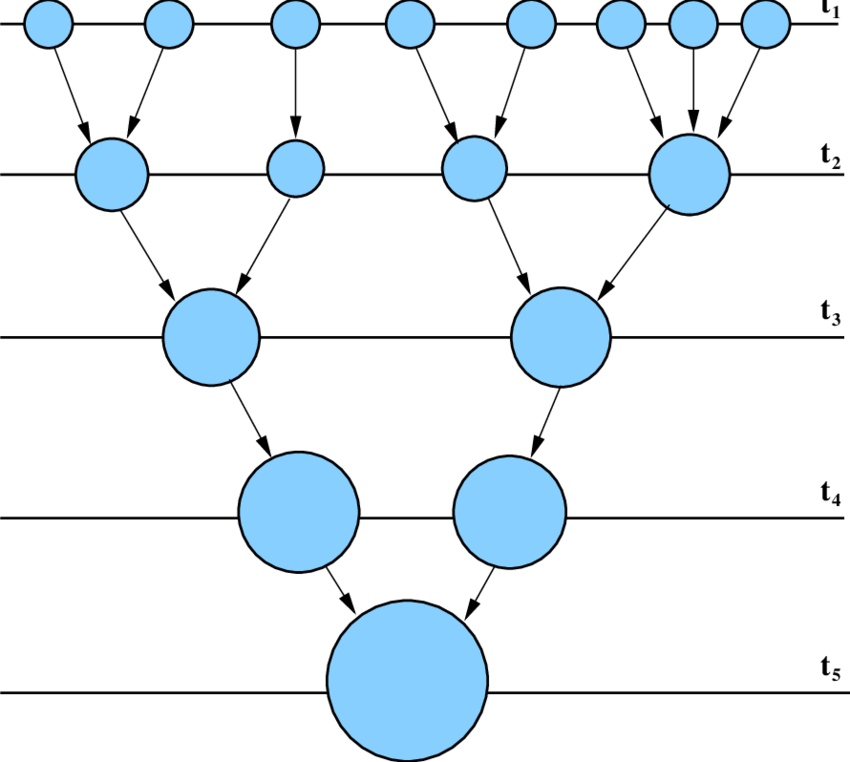
This diagram illustrates the "family tree" that semianalytic models like MAD SAGE are built on. Each horizontal line represents a snapshot in time, with earlier snapshots at the bottom and later ones at the top. Circles represent halos, the invisible dark matter structures that galaxies form inside of, with bigger circles representing more massive halos. Over time, smaller halos merge together and pick up additional mass along the way, eventually combining into the single, more massive halo shown at the top. MAD SAGE uses these merger histories as a scaffold. At each step, it applies its physical rules for gas, star formation, and black hole growth to build up realistic galaxies within this evolving structure.
In short, semianalytic models sacrifice some detail for speed and flexibility, which makes them an ideal tool for exploring how different physical processes shape galaxies on a statistical, population-wide scale.
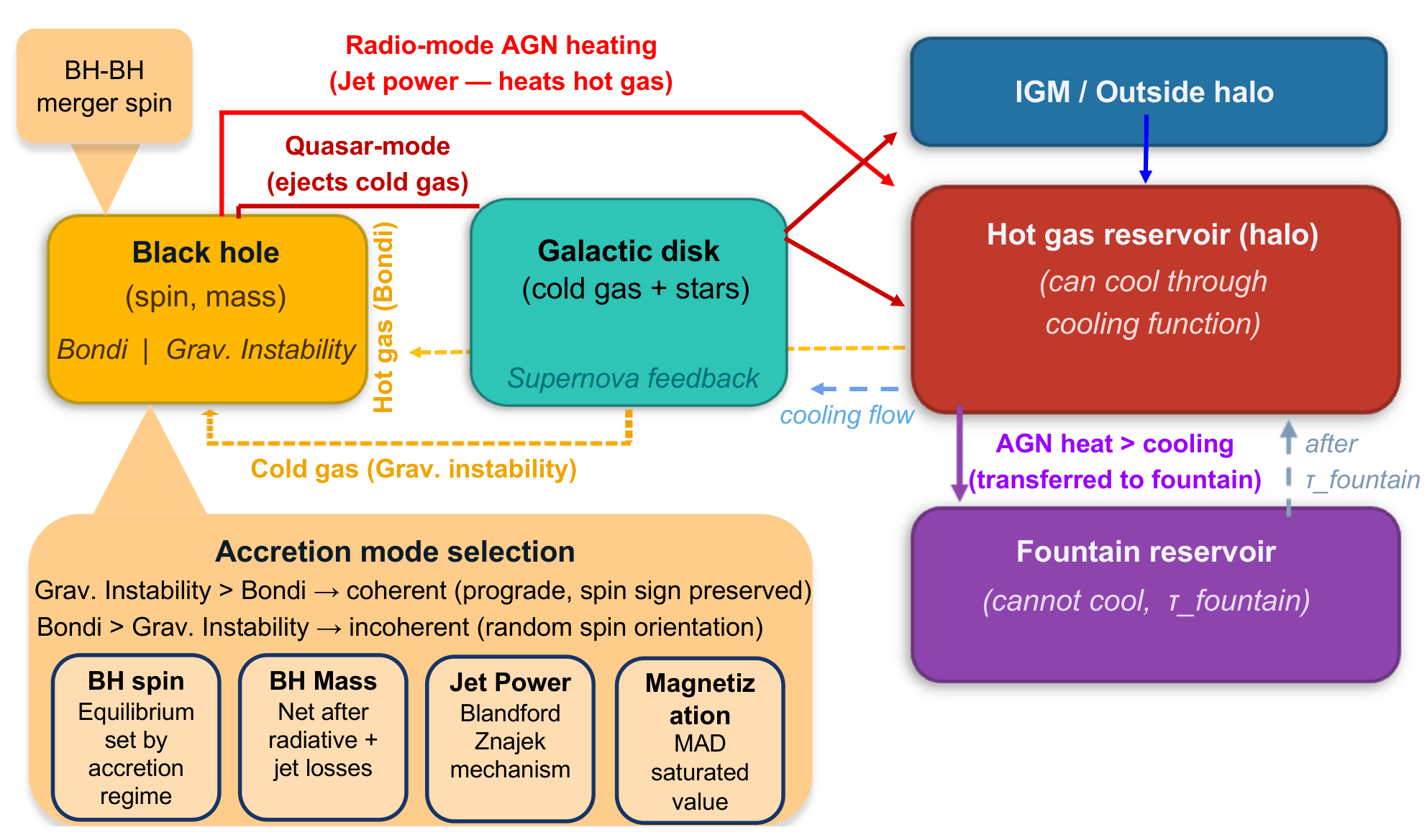
This diagram lays out how MAD SAGE connects a black hole to its host galaxy:
- Gas inflow: Gas falls in from the galaxy's surroundings and settles into a hot cloud, which gradually cools and rains down to fuel new stars and feed the central black hole
- Spin evolution: How the black hole spins depends on how it's fed. A steady, organized supply of gas keeps its spin consistent over time, while a chaotic, disorganized supply causes the spin to change direction unpredictably.
- Feedback: The black hole's spin, together with its mass, sets how much energy its jets can unleash. The energy is powerful enough to push star-forming gas out of the galaxy, or reheat the surrounding gas cloud so it stops cooling and stops feeding the galaxy
Why spin matters
Most models of black hole feedback only track a black hole's mass. MAD SAGE also tracks its spin, because spin is what actually sets the power of a black hole's jets. Two black holes with the same mass can have very different feedback strength depending on how fast they spin and in what direction, so getting spin right is key to getting a galaxy's history right. This is what makes MAD SAGE unique. It is the only model that traces spin evolution alongside mass growth and feedback, all the way from a black hole's earliest formation to the present day.
Elements
Text
This is bold and this is strong. This is italic and this is emphasized.
This is superscript text and this is subscript text.
This is underlined and this is code: for (;;) { ... }. Finally, this is a link.
Heading Level 2
Heading Level 3
Heading Level 4
Heading Level 5
Heading Level 6
Blockquote
Fringilla nisl. Donec accumsan interdum nisi, quis tincidunt felis sagittis eget tempus euismod. Vestibulum ante ipsum primis in faucibus vestibulum. Blandit adipiscing eu felis iaculis volutpat ac adipiscing accumsan faucibus. Vestibulum ante ipsum primis in faucibus lorem ipsum dolor sit amet nullam adipiscing eu felis.
Preformatted
i = 0;

while (!deck.isInOrder()) {
    print 'Iteration ' + i;
    deck.shuffle();
    i++;
}

print 'It took ' + i + ' iterations to sort the deck.';
Lists
Unordered
- Dolor pulvinar etiam.
- Sagittis adipiscing.
- Felis enim feugiat.
Alternate
- Dolor pulvinar etiam.
- Sagittis adipiscing.
- Felis enim feugiat.
Ordered
- Dolor pulvinar etiam.
- Etiam vel felis viverra.
- Felis enim feugiat.
- Dolor pulvinar etiam.
- Etiam vel felis lorem.
- Felis enim et feugiat.
Icons
Actions
Table
Default
| Name |
Description |
Price |
| Item One |
Ante turpis integer aliquet porttitor. |
29.99 |
| Item Two |
Vis ac commodo adipiscing arcu aliquet. |
19.99 |
| Item Three |
Morbi faucibus arcu accumsan lorem. |
29.99 |
| Item Four |
Vitae integer tempus condimentum. |
19.99 |
| Item Five |
Ante turpis integer aliquet porttitor. |
29.99 |
|
100.00 |
Alternate
| Name |
Description |
Price |
| Item One |
Ante turpis integer aliquet porttitor. |
29.99 |
| Item Two |
Vis ac commodo adipiscing arcu aliquet. |
19.99 |
| Item Three |
Morbi faucibus arcu accumsan lorem. |
29.99 |
| Item Four |
Vitae integer tempus condimentum. |
19.99 |
| Item Five |
Ante turpis integer aliquet porttitor. |
29.99 |
|
100.00 |